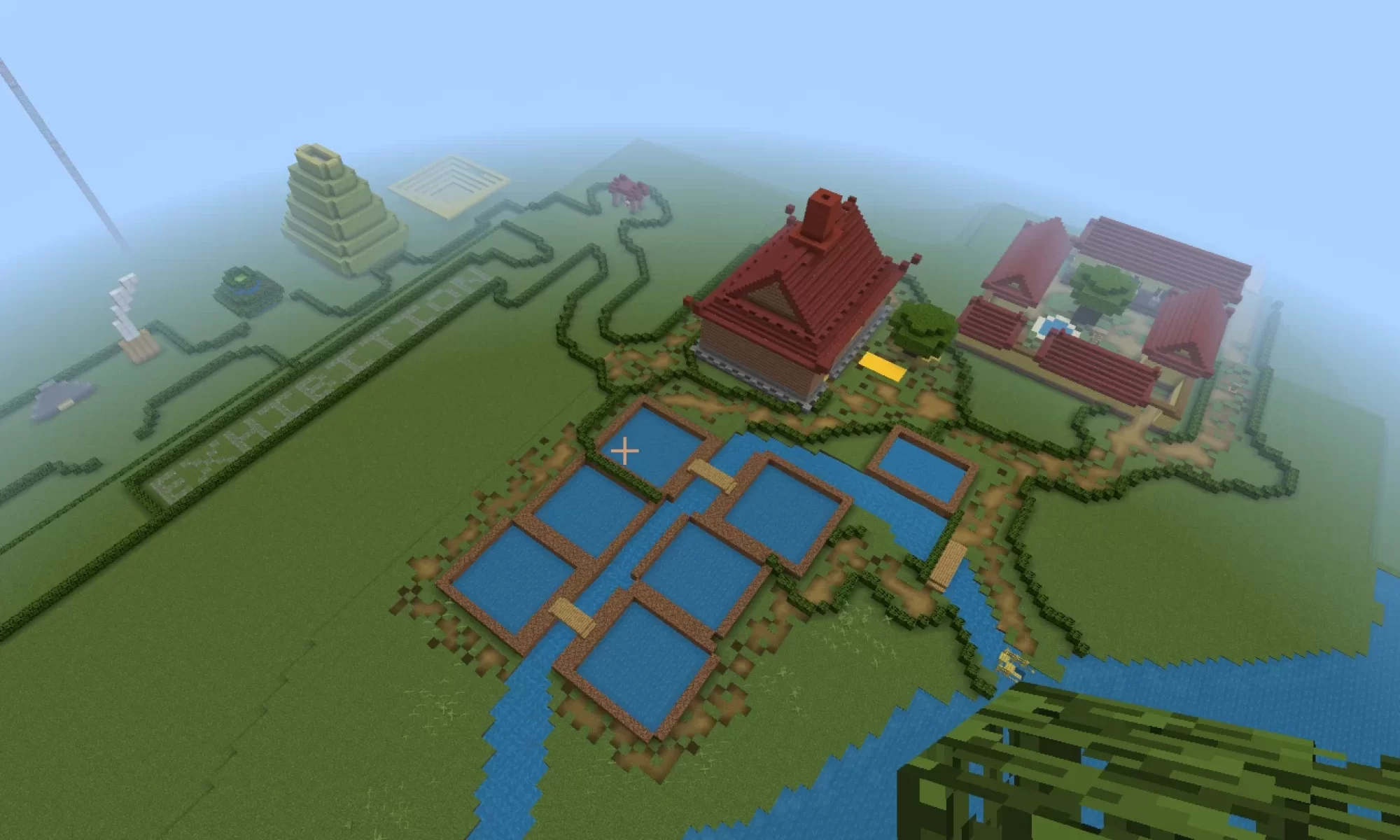
There were three variations of granaries depending on how they were run in this era. Normal Granaries, known as Changpingcang, were originally intended for military supply; they eventually became the state’s tool to balance harvest fluctuations. Charity Granaries, called Yicang, were set up for local famine relief. Rice was gathered directly as a tax rather than being purchased by the state. Community Granaries, known as Shecang, were locally managed and were created due to state mismanagement and failures of the other granaries, allowing local leaders to organize reserves independently. We depict a community granary in our build. By the time we are depicting the normal state granary system has failed in the aftermath of the taping rebellion. It should be noted that our granary would be used by a whole area with numerous paddies like ours donating to it. All three granary types would use the common cang design only varying in scale. (Will et al. 1991, 1-16)
The cang-style granary was a rectangular building constructed to have brick walls reinforced by iron fastenings, with a coating of plaster against dampness. Added internal layers of planks and mats were installed to serve effectively as absorbents of moisture. The bases of granaries were normally of stone slabs or tamped earth, with layers of coal ash, wheat chaff, bricks, planks, and matting on top to prevent moisture from the ground seeping into the grain. Roofs were multilayered for insulation, comprising beams covered with planks, bamboo frames, a layer of earth, and tightly fitted tiles on the outside. In such a combination, heat insulation could be obtained, and extreme changes in temperature could be controlled, both critical for grain preservation. The qilou, or roof lanterns, were large structures placed on the roof to allow warm air to rise and escape, regulating the building’s temperature and humidity. Smaller bamboo cylinders, called qitong, were inserted vertically into the grain to channel humid vapors upward, preventing moisture buildup within the grain. In more humid regions of China, ventilation windows with fine work called fengchuang allowed air to enter and leave but kept out pests such as birds. These windows, along with other small wall openings at ground level, controlled moisture and ground vapors that might otherwise compromise grain quality. Granaries were typically divided into multiple bays called jian, which were separated by wooden partitions. It was a common practice to leave one bay empty and shift the rice between the pods, to promote cooling and airing. (Will et al. 1991, 103-140 )
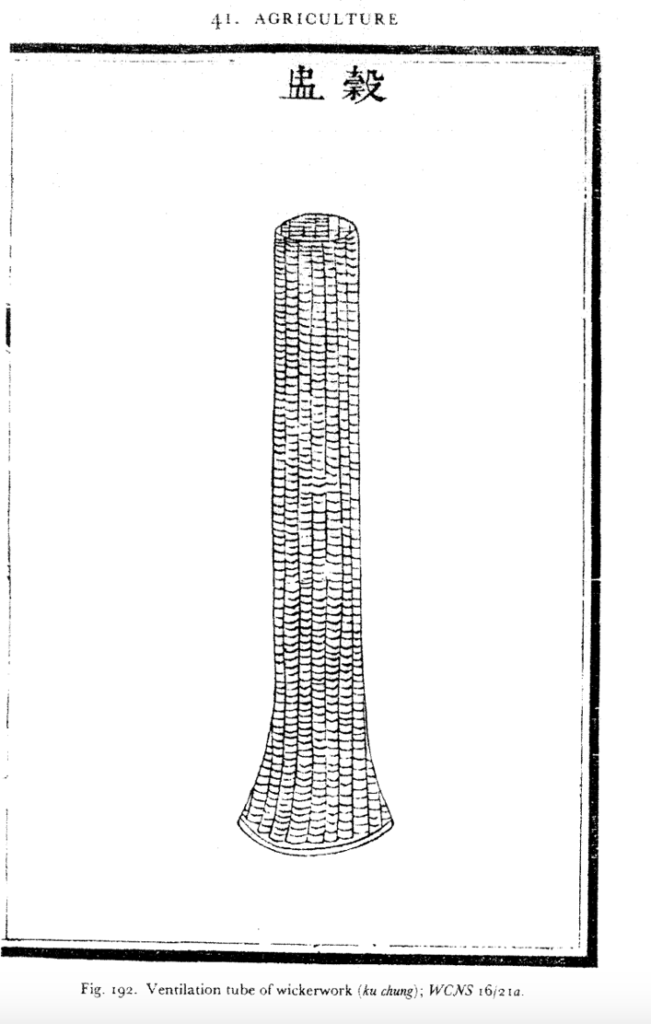
(Bray, 1984)
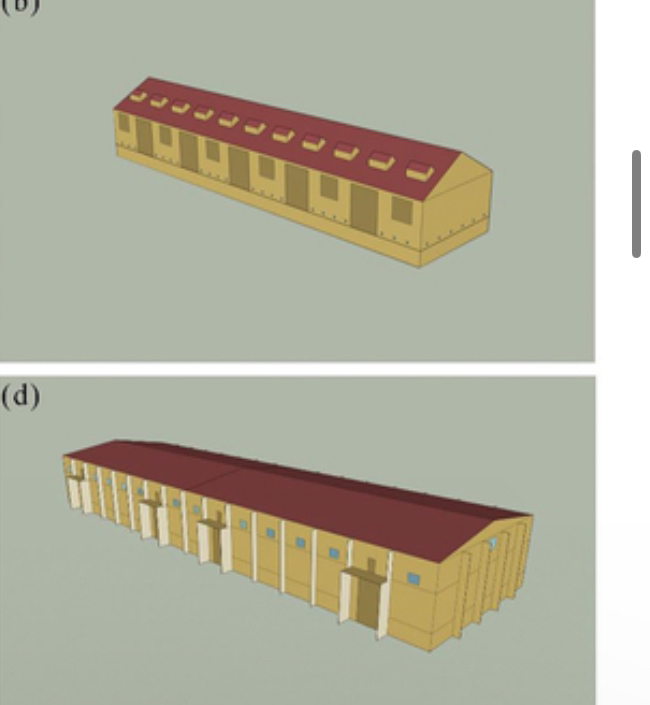
(Zhang 2023)