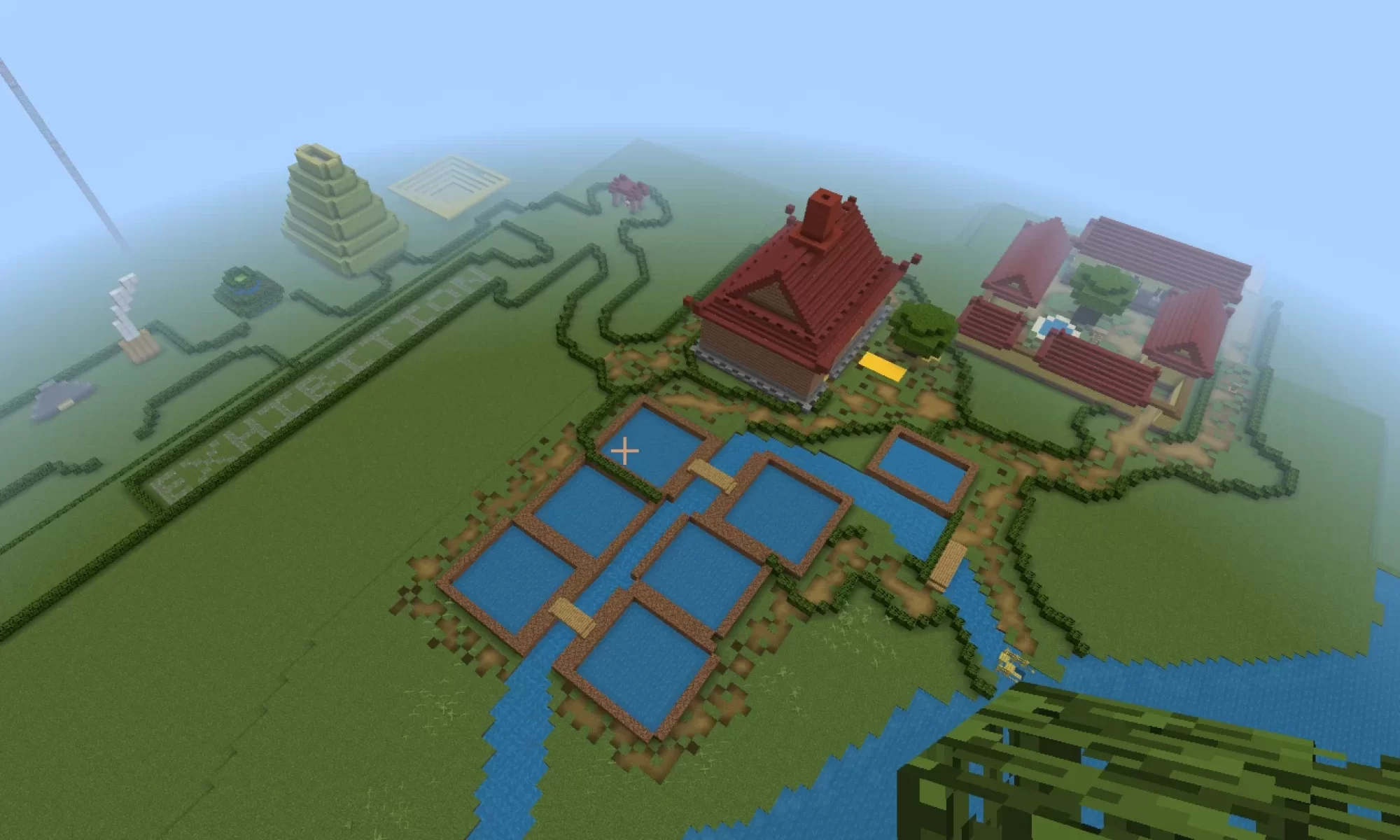
One common field type in the lower Yangtze region is poldered fields or dyked fields called Yu Thien. Typically, these fields are built upon reclaimed wetlands used to create arable lands, which are common in low-lying plains. Small dykes using the dirt and clay from the surrounding lands would be built around rice paddies as a way to prevent flooding and be used as a marker to divide fields. These dykes could be used as walkways for farmers to reach fields and sometimes small bridge-like structures made of wood would also be built on the dykes used to get from field to field with ease. (Bray, 1984, 118-119)
Each field would be divided into smaller plots to create paddies. The fields the harder it was to supply water to water to inner fields, so drainage ditches provided support to flooding inner paddies as well as giving a drainage system during rainier seasons. To fill this drainage ditch with the outside river, a square-pallet chain pump, also known as the dragon backbone pump, would be used to raise water into the inner paddies. The pump was made out of bamboo and wood and would often be man-powered by hand or animal, depending on the size of the pump and the land. The water is lifted through wooden troughs on the pumping system, and axles are attached to both ends. The axles connect a chain with blades to both sides of the trough. When the trough is placed in water, its handlebars are rotated causing the blades on the chain to rotate, pumping up water. (Zong, 2023). The pump would often be a mobile system that could be moved from the river-stream connection to paddies that needed to be re-flooded. (Zong, 2023)Clean water was necessary for fields of rice to thrive, and as such, drainage ditches were dug out at the farthest point upstream and drained downstream. Nursery paddies were prioritized and needed the cleanest water to ensure a proper start to the growth process, so nursery paddies would be the closest to the cleanest point of water access. Proper flooding techniques also helped to maintain the growth of weeds, as some weeds are unable to grow in continuous flooding and certain depths. Early rice stages were usually planted in an inch of water and later grown in as much as six inches once transplanted from nursery fields (How to Grow Rice: Planting, Care, & Harvesting Practices). It is another priority that irrigated fields need to be leveled, and as such, it was common for them to be on valley floors allowing easier control of the amount of water in each paddy. Fields outside urban sectors were much smaller and compact, making proper irrigation necessary for the quality management of the fields. Poorer farms did not have the funds or necessary labor-reducing tools to maintain and regulate fields and systems (Bray, 1984, 118-119)
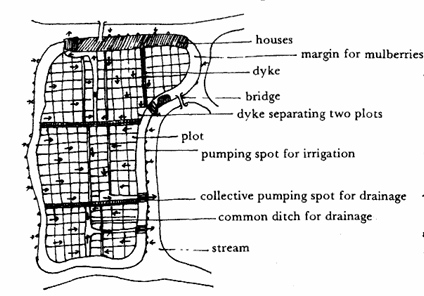
(Bray, 1984, 119)
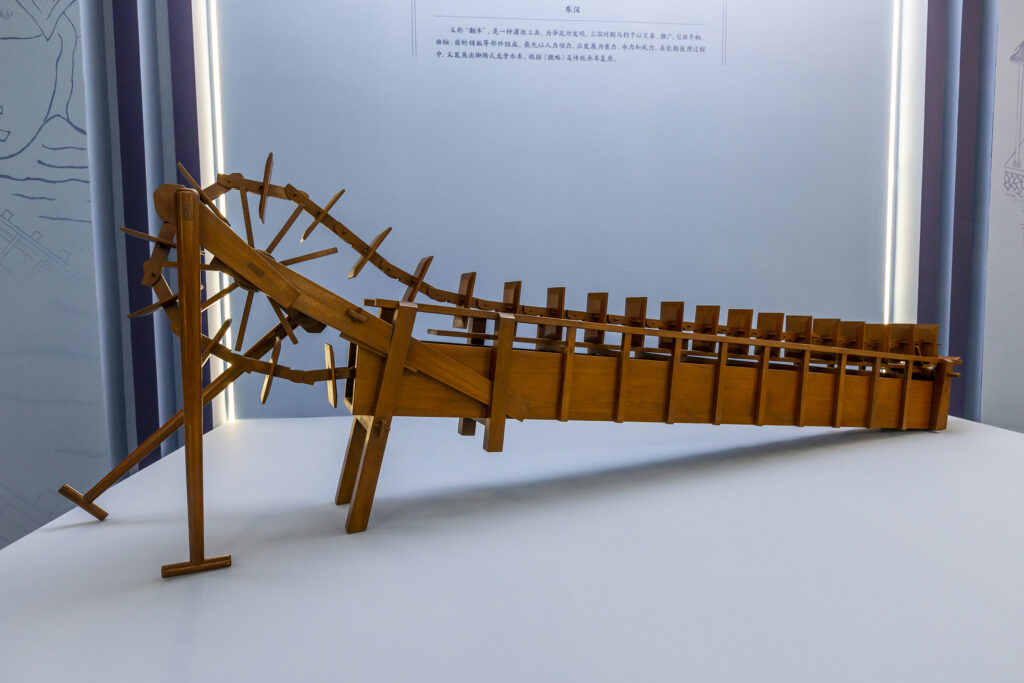
(Zong, 2023)