Welcome to the Jianghan plains in the Hubei province. Located off the Yangtze River, the Jianghan Plain was formed by alluvial deposits, making it particularly rich and great for farming. This area is met with humid and hot summers and warm winters. The farmland we are currently using is a rented piece of land. Land parcels were often divided into small plots that could be worked by a collective of 1 to 4 different households, where the landlord would retain a larger parcels. After the 1820s, landlords could no longer extort services from their tenants. However, they could collect taxes and payments adjacent to municipal bureaucratic structures. Tenants would begin to pay these rents and taxes in quota-based fees, aka based on crop sales. We copied a simple Siheyuan style to model a farm home, recognized by its four outer walls and single-entry courtyard layout. The house in our build is close to the road for travel and away from the water source to prevent contamination that could negatively affect the crop’s yield if the water is polluted. It is also a place used for the storage of tools and baskets.
        One common field type in the lower Yangtze region is poldered fields or dyked fields called Yu Thien. Small dykes using dirt and clay from the surrounding lands would be mounded around rice paddies as a way to prevent flooding and be used as a marker to divide fields. Drainage ditches were built around paddies to avoid flooding and to flood the inner fields. A square-pallet chain pump, also known as the dragon backbone pump, would be used to fill this drainage ditch when fields would become dry. This man- or animal-powered machine is light enough to be moved to reflood the inner fields. To begin farming, seeds would be germinated by being soaked for 5 nights, then drained and put into a grass basket where they would be kept warm and damp. After 3 nights, they would begin to shoot. After germination, the shoots would be sown into the nursery field, gently placed and covered with dirt. During June, around 2-8 weeks after sown, the rice would be cut from the root and quickly dried on a bamboo rack before being moved into the main fields. The seeds would be placed around 6-9 inches apart to maximize growth. Rice would be hand-weeded 2-3 times during its growth period. While many farmers used their bare hands to weed the paddies, it was a long-running practice for some to use carved bamboo weeding claws worn on the tip of each finger, providing protection and sharpness for uprooting the weeds.
After 3-6 months of growth, plants were harvested in September or October. Rice plants were either cut using a harvesting knife, which helped inspect individual plants to ensure ripeness, or a serrated sickle, which cut in bulk. After the initial cut, the plants were then threshed, which removed the grain from the straw. Mobile threshing floors would be made out of finely woven mats. Threshing the seed could be done by hand or removed by being treaded upon. Grain would be treaded upon while still damp to be less harmful to feet. The final process of harvesting would be winnowing. Winnowing is the process of removing the heavy grain from the chaff, also known as hull, through manipulation. Farmers would use winnowing baskets or trays which require dextrous movements by a rhythmic flick of the wrists where the chaff is flicked off the edge of the basket and the heavy grain sticks to the bottom of the basket. Sieves or Shai were also a substitute and would be suspended from trees and did not require hand movement. Typically the grain would be stored before dehulling. The granary on our site represents a community granary known as shecang. Shecang would be used by a whole area with numerous paddies like ours donating to it, aka the other renters on our plot. Inside there would be rooms for individuals to put their hulled rice grain. Rice woud then be sold to the state where it would be sold off to the provinces with low rice production and tended to be much drier.
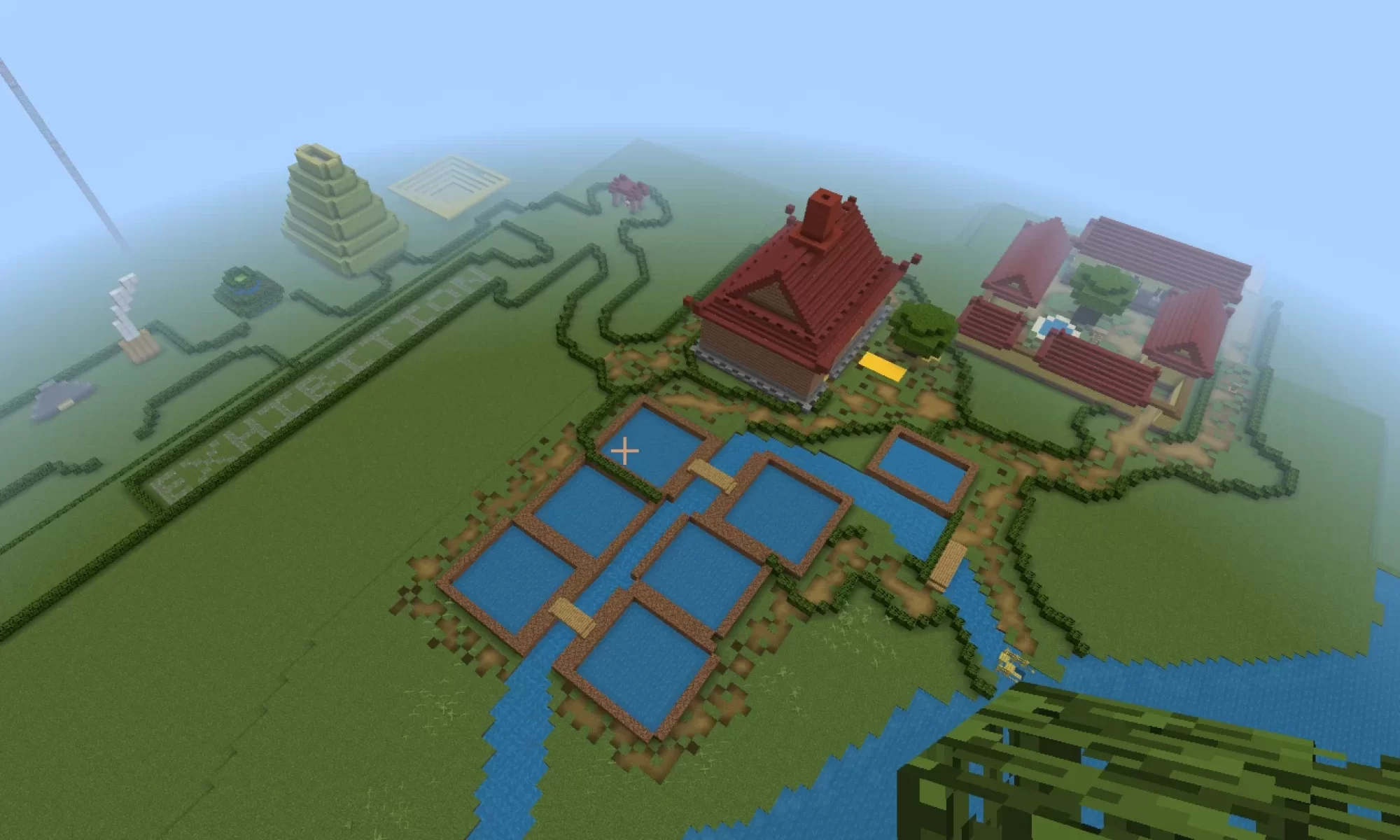
Qing era Rice Cycle